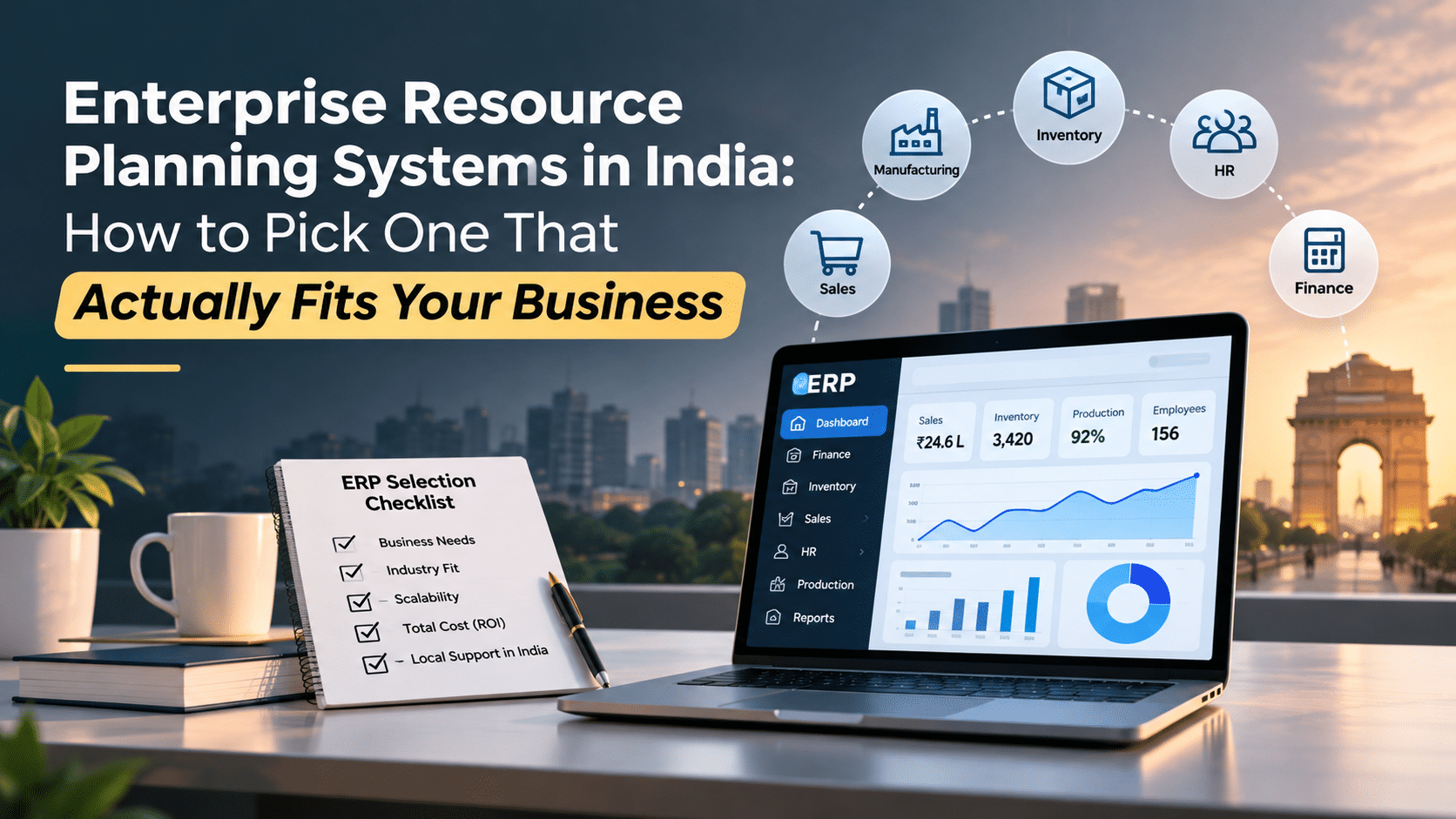
Most businesses don’t start looking for an ERP because they’re excited about software. They start because something hurts. Month-end takes two weeks. Nobody trusts the stock numbers. The finance team lives in spreadsheets, and every approval chases someone across WhatsApp. If that sounds familiar, you’ve probably come across Microsoft Dynamics 365 Business Central ERP in your search. It’s a popular choice for growing companies, and for good reason. But the software is only half the story. How it’s set up matters far more than most buyers expect.
What it actually does for you
At its core, Business Central pulls the main parts of running a company into one system. Here’s how the Chartecha’s page describes the main areas.
Finance first. Accounting, cash flow, budgets and financial reporting sit in one place, so you can see the numbers as they happen rather than at the end of the month.
More than one company. If you run several entities or deal with inter company transactions, they can be handled in a single system instead of separate files that never quite reconcile.
GST that doesn’t eat your week. For Indian businesses, this matters a lot. The platform can automate GST calculations and filings and produce tax reporting that’s ready for an audit.
Inventory and supply chain. Stock, warehouses and procurement get tracked with live visibility, which helps with the question every owner asks: what do we actually have right now?
Approvals with some discipline. Role-based approval workflows add structure and accountability, so a purchase doesn’t depend on who happened to see the email.
Reports you can use. Dashboards and MIS reports give you something better than a spreadsheet someone built at midnight.
None of this is exotic. The value is in having it connected, so finance, sales and stock aren’t telling three different stories.
Why the partner matters more than the license
Here’s something people learn the hard way. Two companies can buy the same ERP and end up with completely different outcomes. One gets a system that fits how the business runs. The other gets a half-used tool nobody trusts.
The difference is usually the Microsoft Dynamics 365 implementation partner. They shape how your processes are mapped, how your old data moves across, and how well the system matches your industry rules.
Chartecha’s, for example, positions itself as a certified implementation and integration partner for Business Central, and it leans on a finance-first, process-driven approach. That’s worth noting, because it combines Chartered Accounting expertise with ERP technology. For a system whose main job is financial control, a partner who understands accounts, compliance and reporting from the inside can be a real advantage.
What a proper implementation covers
A good project involves more than switching software on. According to the page, the work typically includes:
- Implementation and deployment, matched to your financial structure and workflows, aiming for a smooth go-live.
- Customization, so the system reflects your processes, regulations and industry, instead of forcing you into a generic mold.
- Integration with banks, CRMs and other platforms, so the ERP isn’t an island.
- Data migration from older systems, with validation to keep the numbers accurate and disruption low.
- Workflow design, especially approvals.
- Ongoing support, including monitoring and improvements after launch.
That last one gets overlooked. Plenty of projects look great on go-live day and then drift. Ask any partner what happens in month six.
Two examples of industry tailoring
One thing I like about the Chartecha’s page is that it shows what customization can look like in specific sectors, rather than staying abstract.
Manufacturing. The page describes bringing production, inventory, procurement and financial onto one platform, so the shop floor, warehouse and management work from the same live data. The customized modules mentioned include an integrated procurement and inventory setup with MRP, shop floor management, a cost and profitability analyzer to catch margin leaks, a vendor portal, a predictive demand and supply engine, and a sales target and incentive tracker.
NBFCs. Here the listed modules focus on compliance and control: automatic GST reversal and expense booking with Ind AS reporting, profit and loss by branch, product or scheme, a live dashboard tracking collections and NPAs, multi-level maker-checker approvals, and RBI-ready regulatory reports.
Whether or not you’re in either industry, the lesson holds. Ask any partner for examples that look like your business.
Questions worth asking before you sign
You don’t need a technical background to ask good questions. Try these:
- Have you worked with businesses in my industry before?
- How will you handle moving my existing data, and how do you check it’s right?
- What will be customized, and what will we use as standard?
- How does GST and other local compliance work in the setup?
- Who supports us after go-live, and how quickly do they respond?
- Can you show me a working example instead of slides?
If the answers are vague, that tells you something.
Is it right for you?
Business Central tends to make sense when your business has outgrown spreadsheets and basic accounting software, but you aren’t ready for something massive and heavy. If you’re running multiple entities, struggling with stock visibility, or spending too long on compliance and approvals, it deserves a serious look.
If your processes are very simple, or you’re unsure what you need, spend time mapping your problems first. A clear list of what’s broken makes any ERP project go better.
Where to go from here
If you’d like to talk to someone about it, Chartecha’s offers a free consultation and can be reached at +91 95216 89595 or solutions@chartecha.com. They have offices in Mumbai and Jaipur. Bring your real problems, such as slow month-end, messy stock or approval chaos, and ask how they’d solve them.
FAQ
What is Microsoft Dynamics 365 Business Central?
It’s an ERP platform that brings financial management, operations, inventory, workflows and reporting into one system.
Does it handle GST?
According to Chartecha’s page, it can automate GST calculations and filings and support audit-ready tax reporting
Can it manage multiple companies?
Yes. Multi-entity and inter company transactions can be handled in a single integrated system
Is it only for finance teams?
No. It also covers inventory, procurement, supply chain, approvals and reporting, so operations teams use it too
Can it connect to other tools?
Chartecha’s lists integration with banking systems, CRMs and third-party platforms.